
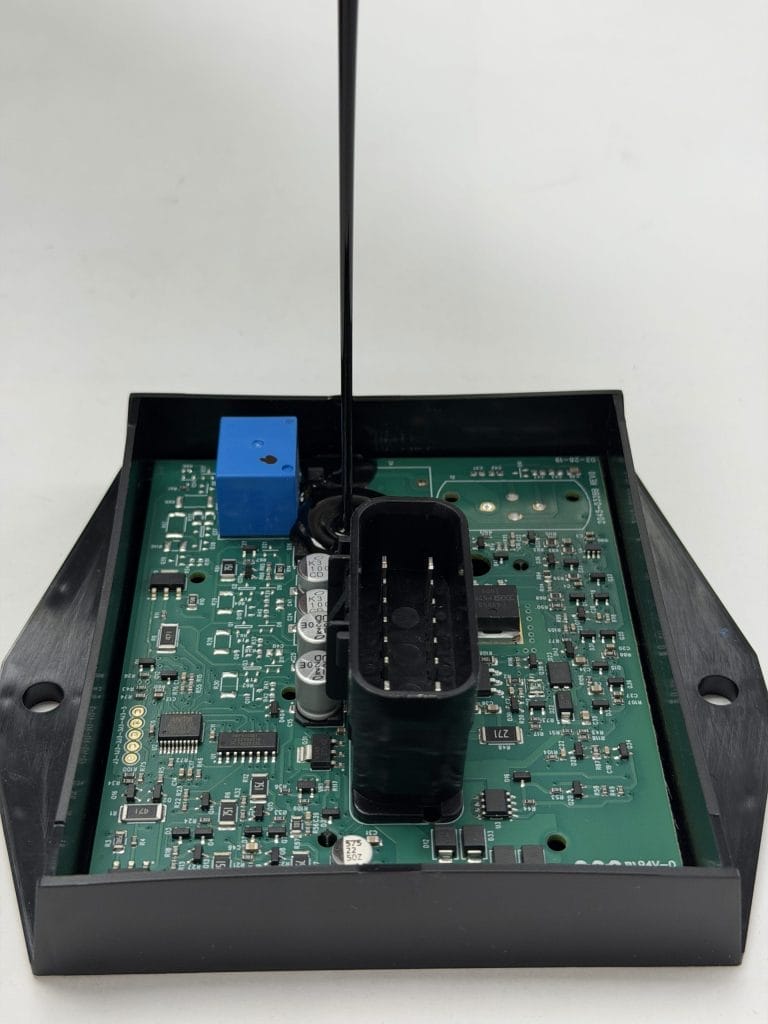
Open electronic control unit prepared for potting
PRODUCT DESCRIPTION

Electrical Potting and Encapsulating

Our chemists develop epoxy, polyurethane, and silicone systems engineered for your performance requirements, including thermal conductivity, dielectric strength, low exotherm, void-free casting, and UL recognition.

Available formulations include:
  • One- and two-component epoxy systems and polyurethanes with excellent thermal conductivity
  • Vacuum-stable epoxies and polyurethanes for void-free casting of high-voltage devices
  • One- and two-component heat-cure epoxy/anhydride systems
  • Two-component ambient-cure epoxy systems and polyurethanes
  • UL-recognized systems
Electronic control module encapsulated in a potted housing
Applications

Where Our Electrical Potting and Encapsulation Protects Electronics

From the vehicle to the factory floor, engineers rely on our epoxy potting to keep sensitive electronics working under conditions that would otherwise destroy them.
Electric vehicle being charged

EV and Automotive Electronics

Battery management boards face heat, vibration, and moisture under the hood. A thermally conductive epoxy potting compound draws heat away while guarding electronics against the harshest driving conditions.
Submersible pump operating in water

Power Supplies and LED Drivers

Dense power components run hot and demand insulation. Our epoxy potting compounds manage heat and shield circuitry, keeping drivers and supplies stable across long duty cycles.
Potted sensor circuit board

Industrial Sensors

Sensors deployed in factories and outdoors meet dust, chemicals, and constant motion. Electrical potting epoxy encapsulates the internals, so readings stay reliable in punishing environments.
Toroidal inductors encapsulated in potting compound

Transformers and Coils

High-voltage windings need dielectric strength and thermal stability. An electrical potting compound insulates the coil, suppresses vibration noise, and holds performance through repeated heating and cooling.
Potted electronic module installed outdoors

Aerospace Avionics

Flight electronics cannot fail under altitude swings and vibration. We formulate potting and encapsulation compounds to aerospace standards, sealing critical assemblies against thermal cycling and mechanical stress.
Wind turbine under construction in an open field

Renewable Energy & Outdoor Systems

Solar inverters and wind sensors live outdoors for decades. Electrical potting protects them from moisture, UV, and temperature extremes, extending service life where replacement is costly.
  • AS9100D
    Certified Manufacturer
  • ISO 9001
    Quality Management
  • 50+
    Years Structural Bonding
  • Fast
    Qualification Cycles

Frequently Asked Questions

Explore the questions we hear most often from engineers and procurement teams weighing our potting and encapsulation compounds.
What is the difference between potting and encapsulation?

Potting fully fills an enclosure, so the component is embedded in solid resin. Encapsulation usually means a thinner protective layer over the part. In practice, the terms overlap, and we formulate for both.

When should I choose epoxy for electrical potting?

Epoxy suits applications requiring rigidity, strong adhesion, and chemical resistance. It excels where a hard, durable seal matters more than flexibility, which is why it dominates automotive, power, and aerospace electronics.

Can you make a thermally conductive epoxy potting compound?

Yes. We engineer a thermally conductive epoxy potting compound that draws heat away from dense components toward the housing, keeping temperatures within a safe range that protects long-term performance.

Do your epoxy potting compounds meet flame-retardant standards?

They can. We formulate potting epoxy to UL flame-retardant ratings when the application demands it, then document the results so your quality team has audit-ready proof for certification.

How do I know which electrical potting compound fits my application?

Let us know your operating environment, thermal loads, and dielectric needs. Our chemists match the right electrical potting compound to those conditions rather than handing you a fixed catalog product.

Can you supply production volumes with consistent quality?

Yes. As certified epoxy potting compound manufacturers, we scale from lab samples to production quantities while maintaining the same formulation and documentation across every order.

OUR JOURNEY

Three Decades of Formulation Excellence

Built on Experience. Driven by Innovation. Defined by Quality.
1

Submit Engineering Brief

2

Chemistry
Review Call

3

Lab
Formulation

4

Application
Testing

5

Qualification
Data Package

6

Production
Approval

Innovative Resin Systems laboratory workspace