Vehicle door frame on an automotive assembly line
PRODUCT DESCRIPTION

Wide Range of High-Performance Structural Adhesive Systems.

IRS REZ-CURE® and ACRYLIC-CURE® structural adhesive systems are engineered for demanding bonding applications across aerospace, automotive, filtration, and industrial manufacturing. Each formulation is developed for your substrate combination, service temperature, and application method, starting with your engineering challenge, not a catalog.
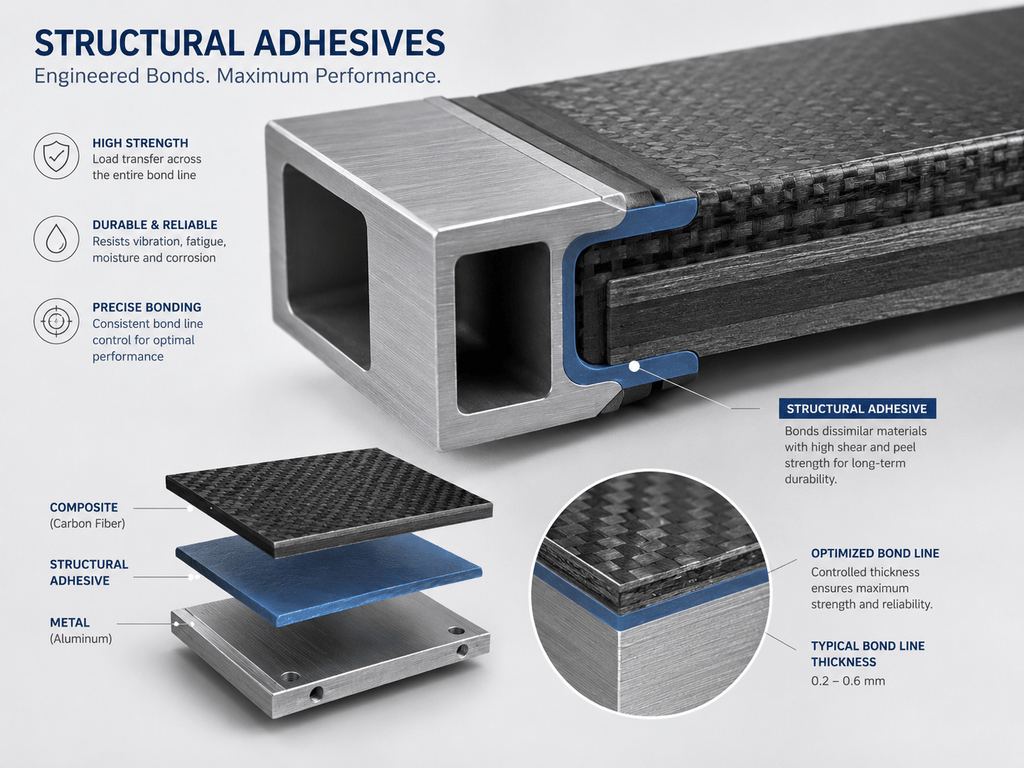
Diagram of structural adhesive bonding layers in a composite panel
Applications

Where Our Epoxy, Polyurethane and Acrylic Adhesives Perform Under Load

From the assembly line to the field, engineers rely on our structural adhesives to carry loads that welds and fasteners can’t handle alone.
Automated adhesive application on an aerospace structural assembly

Aerospace Structures

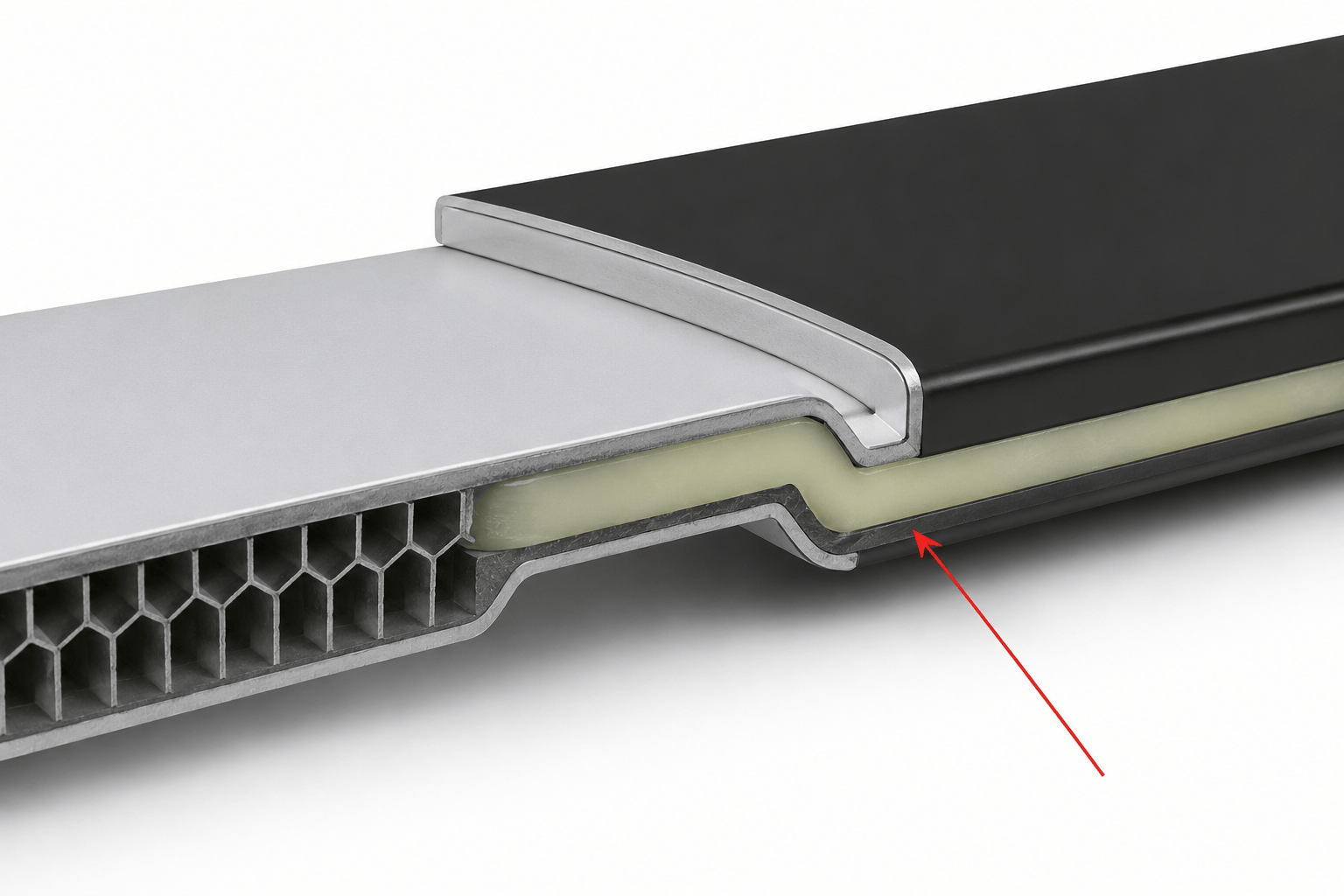
Composite panels, honeycomb cores, and metal skins demand joints that survive altitude, vibration, and heat. An aerospace-grade epoxy bonds these assemblies while trimming the weight that rivets add.

Structural adhesive bead applied to an automotive body panel

Automotive and EV Assembly

Lightweight vehicles join aluminum, steel, and composite in one structure. Our metal epoxy adhesive bonds these dissimilar materials and distributes crash loads evenly across the entire joint.
Cross-section of a honeycomb panel bonded with structural adhesive

Metal Fabrication

Welding warps thin panels and concentrates stress. A structural adhesive for metal spreads the load across the overlap, sealing the joint against corrosion at the same time.
Sheet moulding compound panels bonded on an automotive component

SMC Bonding

High-performance structural adhesive solutions are designed for strong, durable bonding of Sheet Molding Compound (SMC) components. They provide excellent adhesion, impact resistance, and long-term reliability for automotive body panels, structural assemblies, and other demanding composite applications.
Carbon fibre bicycle frame on a workshop bench

Bicycle Frames

Structural adhesives enable strong, lightweight bonding of bicycle frame components while reducing the need for mechanical fasteners or welding. They help improve load distribution, fatigue resistance, and overall frame durability.
Wind turbine rotor blades against a dark background

Turbine Blade Bonding

High-performance structural adhesives provide reliable bonding for turbine blade components exposed to demanding mechanical and thermal conditions. They help improve joint durability, vibration resistance, and long-term structural integrity.
  • AS9100D
    Certified Manufacturer
  • ISO 9001
    Quality Management
  • 50+
    Years Structural Bonding
  • Fast
    Qualification Cycles

Frequently Asked Questions

Explore the questions we hear most often from engineers and procurement teams evaluating our structural adhesive systems.
When should I choose epoxy instead of a structural acrylic adhesive?

Epoxy delivers the highest strength, temperature endurance, and chemical resistance for rigid joints. Acrylic cures faster and bonds oily surfaces, so the right pick depends on your substrates and line speed.

How do you handle structural bonds under vibration?

Our automotive structural adhesive systems distribute loads across the bond line and are engineered to withstand the vibration and fatigue of long-term vehicle operation.

Can you bond metal to metal and metal to plastic?

Yes. We formulate epoxy adhesive for metal that joins steel, aluminum, and mixed assemblies, and we tune the same chemistry to bond metal to plastics, composites, and glass.

What technical support do you provide during qualification?

You’re not handed a data sheet and left on your own. Our chemists support you through formulation, testing, and qualification, providing the guidance and documentation your approval process requires.

Can you scale from prototype to production volume?

Yes. The formulation you approve in the lab is the one produced at scale, batch after batch, with ISO 9001 and UL documentation to ensure consistency from prototype to production.

OUR JOURNEY

Three Decades of Formulation Excellence

Built on Experience. Driven by Innovation. Defined by Quality.
1

Submit Engineering Brief

2

Chemistry
Review Call

3

Lab
Formulation

4

Application
Testing

5

Qualification
Data Package

6

Production
Approval

Innovative Resin Systems laboratory workspace